
SANDSTONE
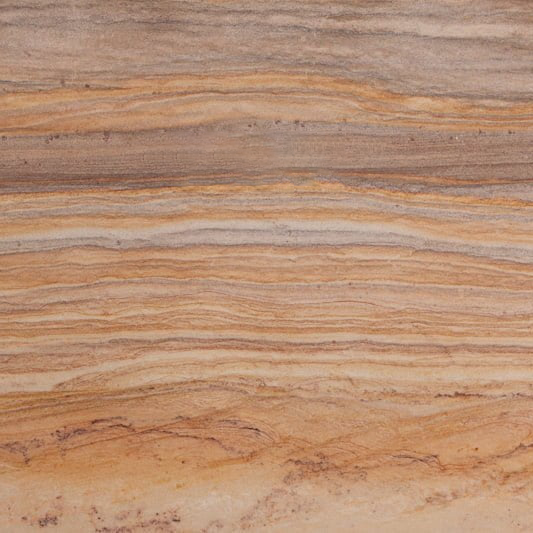
Sandstone, generally ranking between 6 and 7 on the Mohs hardness scale, varies in durability based on its composition. Quartz-rich sandstones are tougher, while limestone-based ones are softer and more weather-resistant. They tend to be more porous than granite or quartzite, making them prone to staining without proper sealing.
Sandstone is a sedimentary rock primarily composed of sand-sized grains of quartz, feldspar, and other minerals bound together by cementing agents like silica or calcium carbonate. It forms over millions of years from sand deposited in various environments and compacted by pressure.
Sandstone is a versatile and appealing material for building, paving, and decorative uses. Its unique textures and colors ensure it remains a popular choice. However, proper sealing is necessary to maintain its beauty and longevity.
-
Sandstone exhibits visible grain structures that can be fine or coarse:
Fine-grained: Smooth and similar to siltstone.
Medium to coarse-grained: Rougher with larger visible grains.
Porous: Lighter and more permeable with open spaces.
-
Sandstone can be finished different ways:
- Polished: Smooth and shiny but less common due to porosity.
- Honed: Matte and smooth, suitable for various surfaces.
- Sandblasted Finish: A textured, matte appearance with a slightly rough surface.
- Rock Pitch: Rough, chiseled edge for a rugged look.
Sealing the stone is highly recommended for staining and water absorption.
-
Sandstone varies in color based on mineral content:
White/Light Gray: High quartz content.'
Beige/Cream: Due to feldspar, clay, iron oxide, and calcite or dolomite.
Golden/Brown: Due to iron oxide.
Red/Pink: Iron-rich types.
Green: Contains glauconite or chlorite.
Black/Dark Gray: From organic material or manganese deposits.