
LABRADORITE
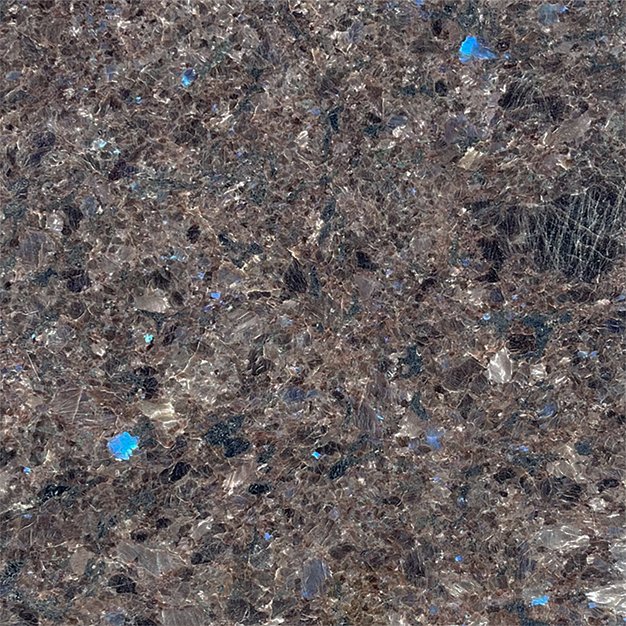
With a Mohs hardness of 6 to 6.5, labradorite is softer than quartz but tougher than marble. It can scratch easily and is sensitive to acids, which may dull its surface.
Labradorite is a feldspar mineral in igneous rocks such as gabbro, basalt, and anorthosite. It crystallizes from magma as it cools within the Earth's crust. Weathering brings it to the surface for mining. As it forms, changes in its internal structure create layers that produce labradorescence, causing beautiful iridescent colors when light hits the mineral at certain angles.
-
Labradorite has a medium to coarse grain texture:
Fine-grained varieties occur in denser rocks like basalt.
Coarse-grained examples are found in anorthosite and gabbro.
The stone feels smooth but can be brittle.
Other elements can alter labradorite's appearance:
Titanium and iron enhance blue and green flashes.
Copper introduces warmer colors like orange and gold.
Variations in magnesium and calcium affect transparency and texture.
-
The most popular finish for labradorites is polish, which enhances labradorescence. High-gloss finishes allow light to showcase vibrant colors. Honed or matte finishes are less common as they reduce the visibility of iridescence.
-
Labradorite features various base colors and iridescent flashes:
Base Colors:
Gray
Black
Green
Brown
Blueish-gray.
Iridescent Colors:
Blue and green (most common)
Gold and yellow (less common)
Orange and red (rare)
Purple and violet (extremely rare).